While Malawi has the land, demand, private sector interest and policy ambition to transform its agriculture sector, experts have said progress has stalled due to deep structural and coordination failures.
Speaking at the 16th Eminent Speaker Series in Lilongwe on Thursday, Alliance for the Green Africa Revolution (Agra) vice-president for technical expertise Jonathan Said said Malawi’s challenge is not a lack of ideas, but failure to organise and execute reforms at scale.
He said: “There have been many efforts over many decades in Malawi, but we have largely stalled in driving key reforms that can unlock private sector investment.
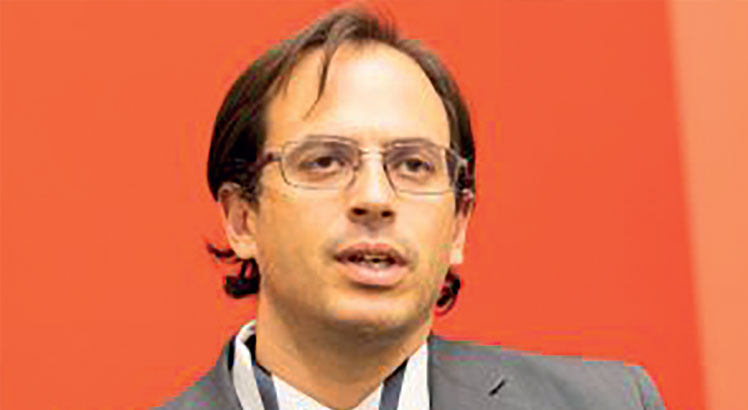
“The reason we have stalled is that the political economy has led to efforts fizzling out.”
Said cited high potential value chains such as soya beans and groundnuts as crops that could narrow Malawi’s foreign exchange gap.
Last year, Malawi imported goods and services worth about $3.6 billion (about K6.3 trillion) with exports recorded at $1.8 billion (about K3.1 trillion), according to the National Stastical Office, creating persistent foreign exchange shortages.
But Said said soya beans and groundnuts alone can address most of that gap if the farmers are helped to meet their potential, adding that Malawi must diversify beyond traditional crops such as maize and tobacco to unlock value addition and export growth.
In his contribution, Mwapata Institute board chairperson Richard Mkandawire said the country’s biggest challenge is not lack of frameworks, but failure to coordinate implementation across institutions.
He said: “We have a pool of knowledge which needs to guide implementation, but the greatest challenge is how we localise that and ensure that institutions take responsibility.
“We need to make sure that we are not speaking at cross purposes, but with one voice.”
Mkandawire said coordination failures extend to the district level where government agencies, development partners and non-govermental organisations often operate in silos, undermining impact.
He said there is need for strong institutional leadership and alignment of national priorities.
On her part, Malawi Confederation of Chambers of Commerce and Industry chief executive officer Daisy Kambalame said fragmented industry associations and policy inconsistency are weakening coordination.
“Having each value chain with its own association creates problems for policy coordination. If they speak separately, policies will never align,” she said.
Kambalame said macroeconomic distortions, particularly in the foreign exchange market are further discouraging investment.
“If I sell my produce at about K1 751 to the dollar and import at around K4 000 on the black market, that creates a serious disincentive,” she said, adding that financial incentives are skewed away from productive sectors, with investors preferring government securities over manufacturing.
Royal Norwegian Embassy head of administration Liv Sigurdssonat urged collaborative efforts and strong partnerships between relevant stakeholders, saying they are essential to build the required systems and mechanism to transform agriculture into an engine for economic growth.
“Right now, we are fighting over a small pie. But if we can triple the size of the pie and then triple it again we can all benefit much more,” she said.
The event, jointly organised by Mwapata Institute, the National Planning Commission, Lilongwe University of Agriculture and Natural Resources and Agra, brought together various stakeholders in the agriculture sector, including academics and think-tanks.